Maritime InnovationMarine Engineering · Simulation · Collaboration
ELEN

Marine Engineering · Simulation · Collaboration

Marine engineering knowledge and engine-room simulation

A personal initiative led by Nikolaos Diakakis, a marine engineer and educator, sharing technical work, experience in the educational use of simulators and opportunities for international collaboration.

Engine Room Networks — Simulator Lessons

Greek educational resources
DMS-2024A / ENGINE-ROOM SIMULATION
From system operation to technical reasoning.Engine-room systems, simulator-based scenarios and documented technical work.
Marine engineers · Educators · Researchers · Maritime institutionsTechnical exchange & international collaboration

01 / About

About the initiative

Maritime Innovation connects practical engine-room knowledge with technical writing, simulator-based education and the development of engineering scenarios. Work developed for Greek maritime education provides the starting point for sharing selected applications with a wider maritime community.

Nikolaos Diakakis focuses on explaining shipboard systems, documenting technical reasoning and supporting educators in the use of engine-room simulators. Scientific and pedagogical collaboration includes Dr Efstathios Zogopoulos, Mechanical Engineer, PhD, National Technical University of Athens, and Education Counselor for Mechanical Engineering.

The international section welcomes marine engineers, educators, researchers, maritime institutions and simulator developers interested in technical exchange and clearly defined joint projects.
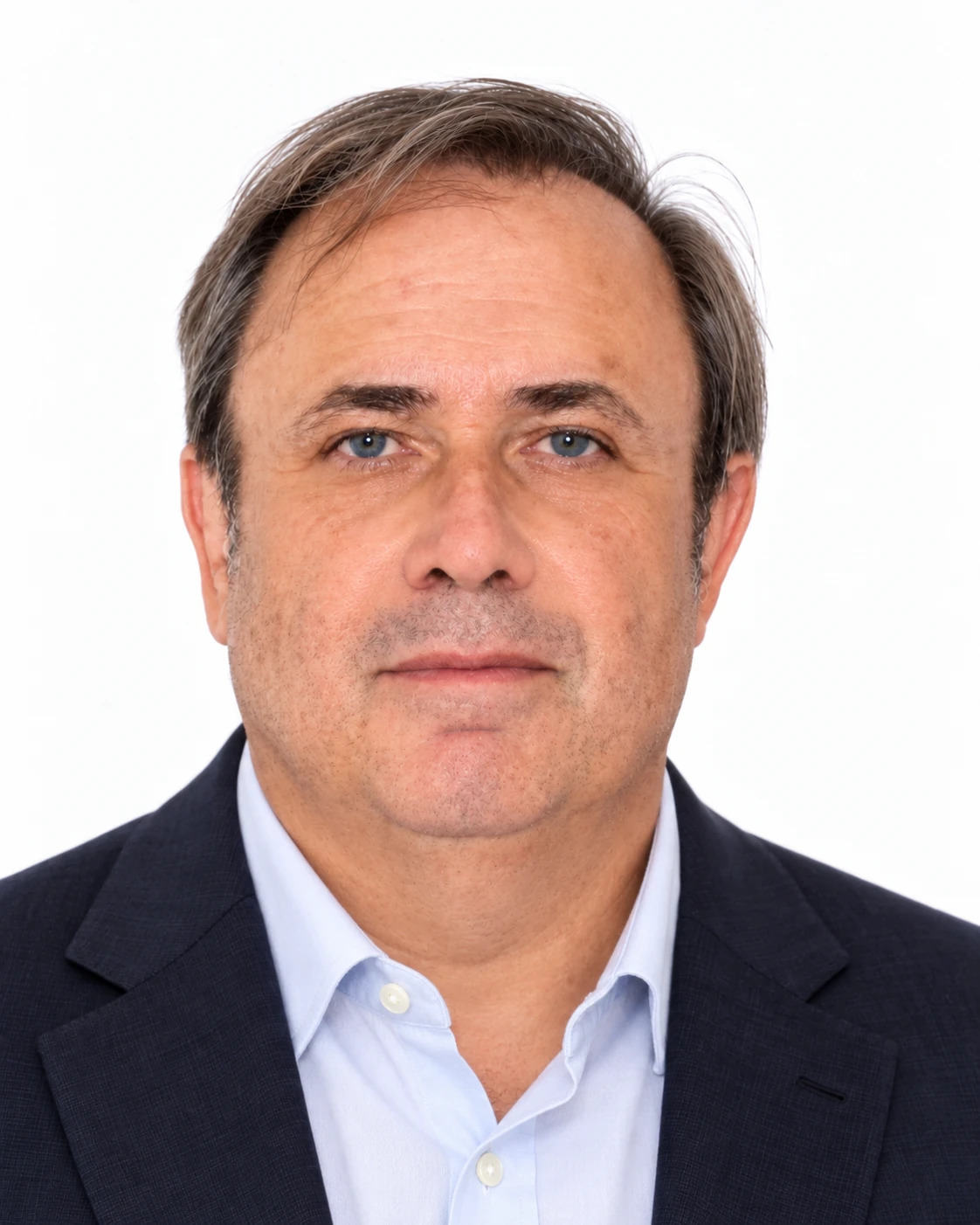
Nikolaos Diakakis, marine engineer and educator
Nikolaos DiakakisMarine Engineer · EducatorDiscuss a collaboration

02 / Simulator expertise

Simulator experience and selected credentials

The work combines the educational use of engine-room simulators with technical documentation, scenario development and educator training. Experience with DMS-2017A and DMS-2024A is reflected in the published Greek-language handbook.

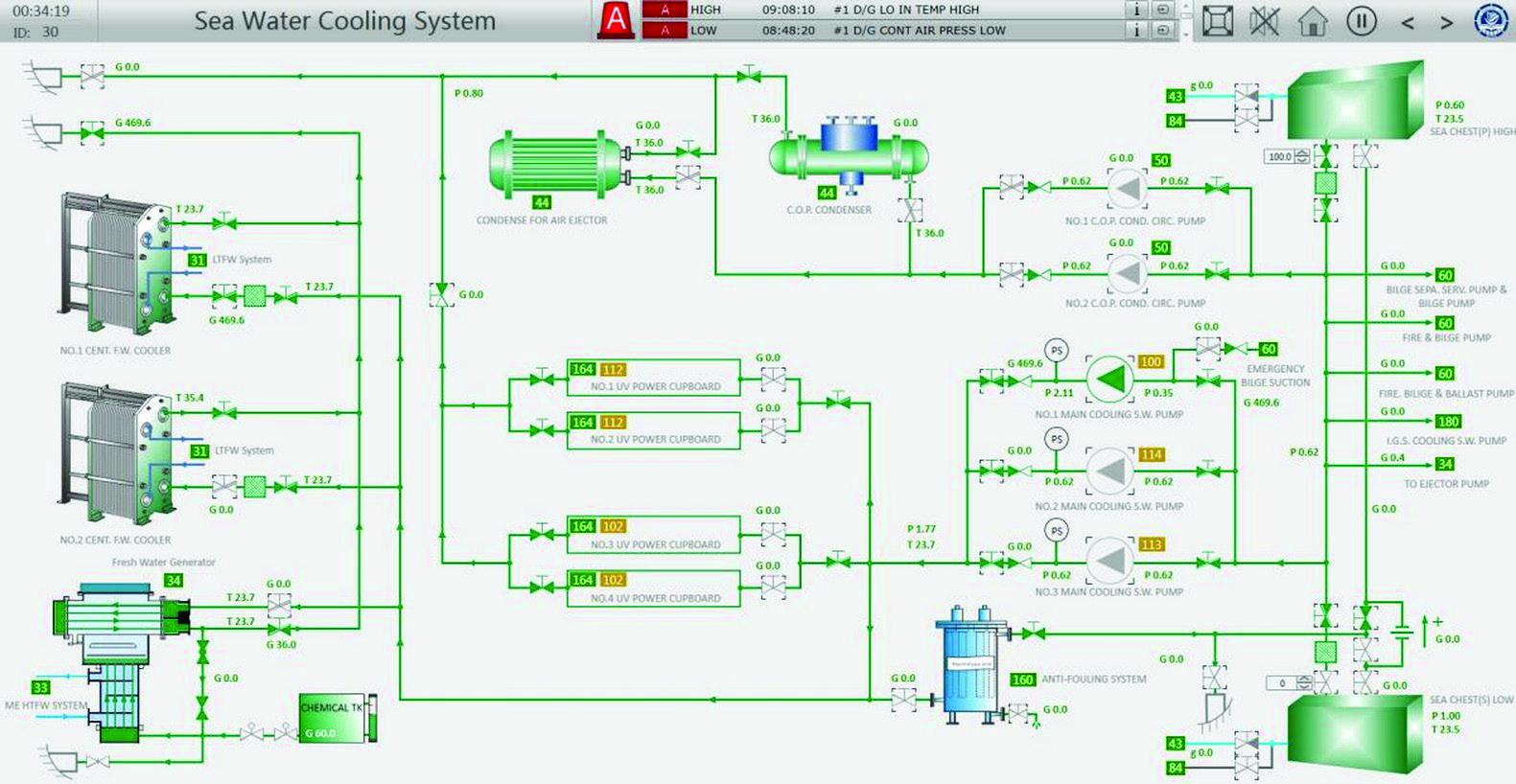
DMS-2017A simulator screen showing the sea water cooling system, pumps, coolers and piping
DMS-2017A · Sea water cooling systemEnlarge image ↗

UNITEST Marine Simulators

Certificate IST 43/2026, issued on 25 September 2026, confirms Nikolaos Diakakis’s technical knowledge and practical competence to train mechanical and marine engineering educators in the operation and educational use of UNITEST Engine Room Simulators.

Wärtsilä Voyage simulator training

Manufacturer-approved Instructor Station Operator Training for Navi-Trainer Professional 6 (21–24 October 2025) and GMDSS Simulator Version 9 (15–17 October 2025), completed at the Eugenides Foundation in Athens.

Existing scientific and educational cooperation

The memorandum effective from 1 October 2026 establishes a cooperation framework between UNITEST Marine Simulators, Dr Efstathios Zogopoulos and Nikolaos Diakakis. It covers simulator use, educator development, educational materials and potential research activities. Individual projects are developed by agreement between the participants.

03 / Technical insights

Technical insights and innovation

Technical work focuses on how shipboard systems function, what information is needed to interpret their behaviour and how simulation can support the investigation of a technical problem. Selected notes connect terminology with system operation and documented applications.

Shipboard electrical power

Generation, distribution, synchronisation, protection and the engineering considerations behind high-voltage installations.

Engine-room systems and fault analysis

Cooling, lubricating oil, fuel and auxiliary machinery, with attention to system relationships, operating indications and diagnostic reasoning.

New fuels and changing technical requirements

Introductions that distinguish fuel properties, shipboard requirements and life-cycle emissions, supported by clearly identified sources.

Technical notes identify their scope, assumptions and references. Manufacturer documentation and relevant IMO and STCW provisions are used where applicable to the subject.

Simulator-based case study

Sea Water Cooling System

A proposed investigation connecting sea-water flow, heat transfer and the low-temperature fresh-water circuit in the DMS-2017A engine-room simulator. Includes technical terminology and documented references.

Read the sea water cooling case study

Cooling and temperature control

Low Temperature Fresh Water Cooling

A proposed investigation of LTFW circulation, cooler bypass and temperature control, building on the sea water cooling case study. Includes an original conceptual diagram, technical terminology and documented references.

Read the LTFW cooling case study

Engine cooling and temperature control

High Temperature Fresh Water Cooling

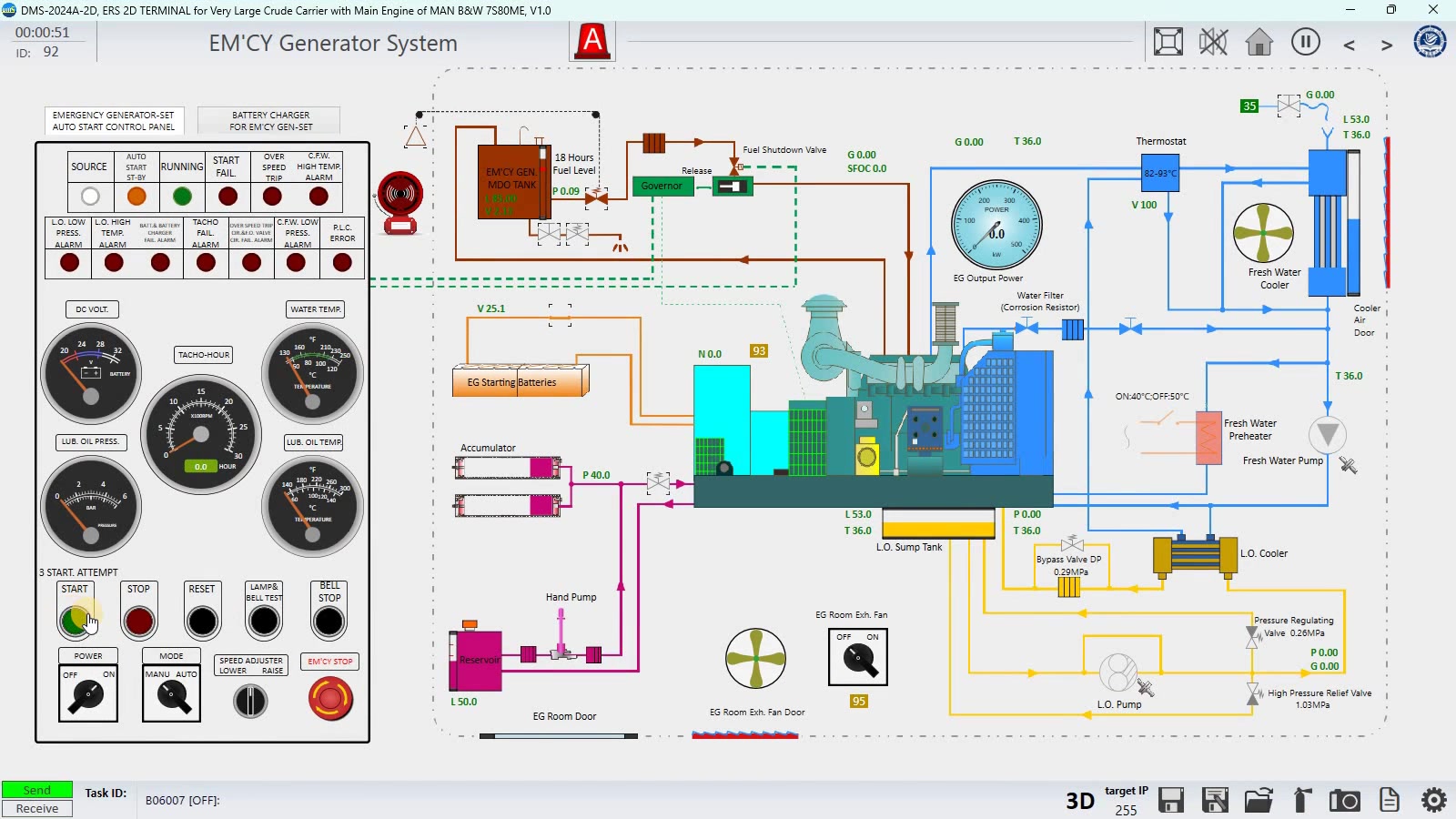
A proposed investigation of main engine HTFW circulation, heat rejection and temperature control. Includes authentic DMS-2024A-2D images, an original heat-path diagram, technical terminology and documented references.

Read the HTFW cooling case study

Lubrication cooling and condition monitoring

Main Engine Lubricating Oil System

A proposed investigation of main engine oil circulation, LT cooling, filtration and condition monitoring. Includes authentic DMS-2024A-2D images, an original circuit diagram and technical references.

Read the lubricating oil case study

Shaft lubrication and sealing

Stern Tube Lubrication and Seal Oil Systems

A proposed investigation of stern tube oil circulation, seal oil functions and pressure relationships. Includes the authentic DMS-2024A-2D ID21 screen, an original functional map and technical references.

Read the stern tube lubrication case study

Dedicated learning collection

Engine Room Networks — Simulator Lessons

Study actual DMS-2024A screens in a separate lesson collection. Start with auxiliary-engine HTFW cooling, English teaching diagrams, six review questions, a thermal-power calculator and an English Word pack.

Explore simulator lessons

Featured technical note

Why ships use high voltage

The voltage level of a ship’s electrical system is selected in relation to its power demand and system design. For a balanced, sinusoidal three-phase load, increasing the line-to-line voltage reduces line current when active power and power factor remain the same.

For an illustrative active electrical power demand of 1 MW at a power factor of 0.8, line current is approximately 1,640 A at 440 V and 109 A at 6.6 kV. The voltage is 15 times higher and the corresponding current is one-fifteenth as large under these assumptions.

1 MW active electrical power · Power factor 0.8

Line current at two voltages for the same balanced, sinusoidal three-phase load
Line-to-line voltageLine current
440 V≈ 1,640 A
6.6 kV≈ 109 A

I = P / (√3 × V × cos φ)

04 / Work & publications

Selected work and publications

Greek-language edition

Digital Engine Room and Marine Systems Management

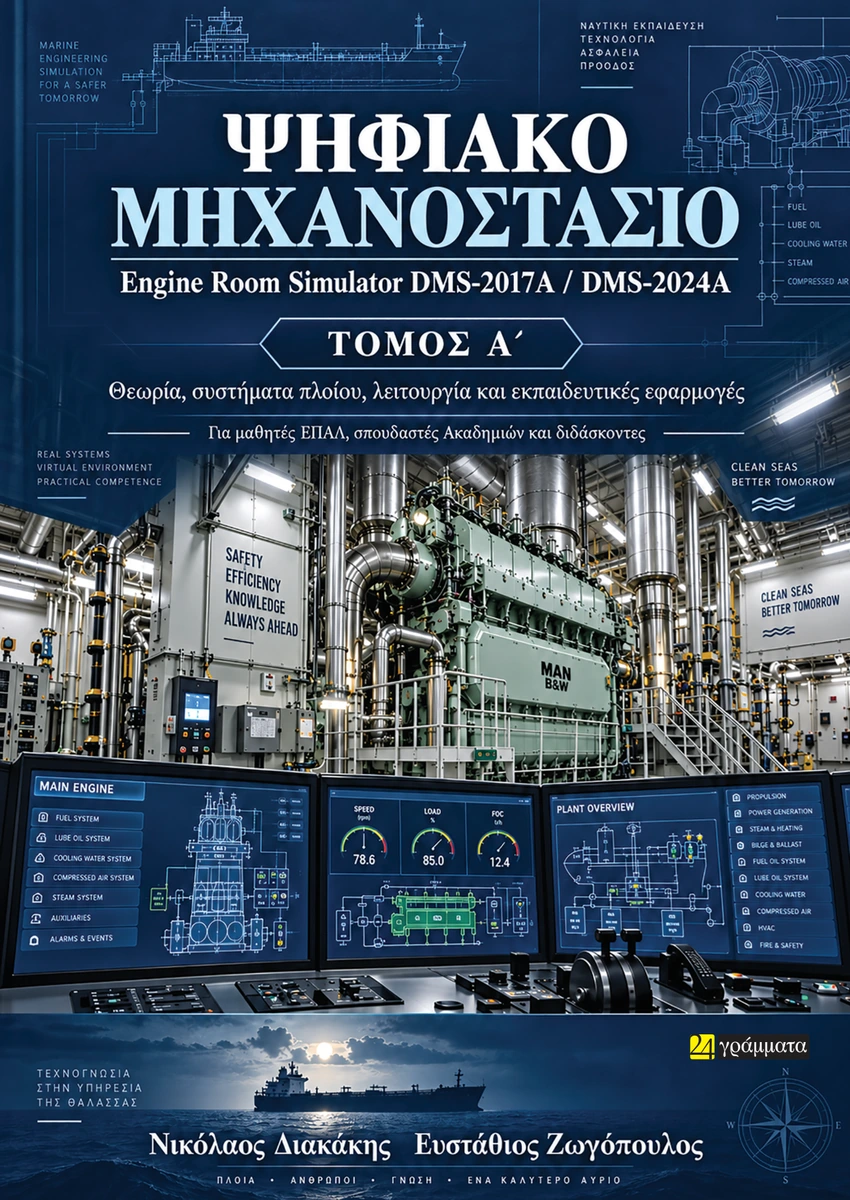
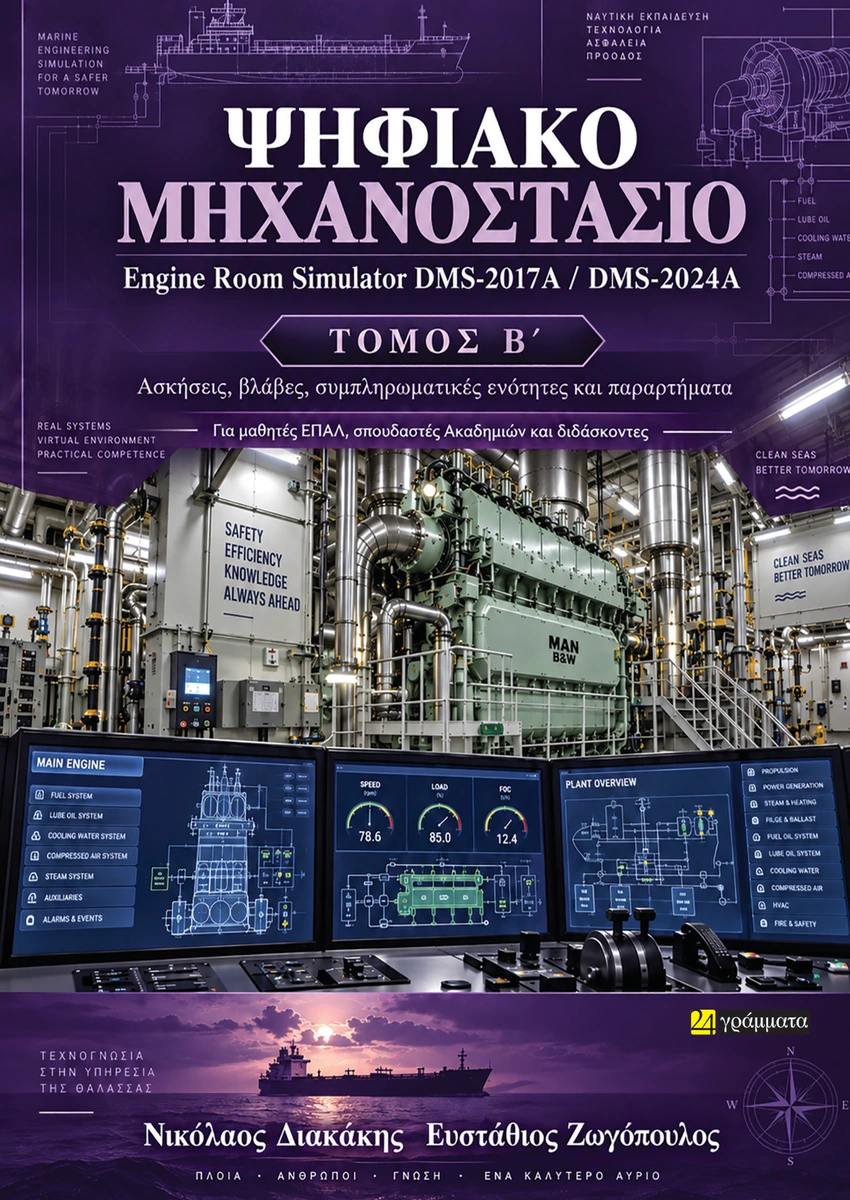
A two-volume technical and educational handbook by Nikolaos Diakakis and Efstathios Zogopoulos, published by 24grammata in 2026. It connects system theory with DMS-2017A and DMS-2024A simulator exercises, fault scenarios, checklists and assessment material.

Volume A covers theory, systems and Exercises 01 to 14. Volume B continues with Exercises 15 to 40, nine supplementary exercises and shared recording and assessment resources.

An English-language edition or selected translated material may be explored as a separate collaboration, in consultation with the co-author and publisher.

Greek-language handbook by Nikolaos Diakakis and Efstathios Zogopoulos, Volume A
Volume A · Greek edition
Greek-language handbook by Nikolaos Diakakis and Efstathios Zogopoulos, Volume B
Volume B · Greek edition
Original title: Ψηφιακό μηχανοστάσιο και διαχείριση ναυτικών συστημάτωνAuthors: Nikolaos Diakakis and Efstathios ZogopoulosPublisher: 24grammata, Athens, 2026Volume A ISBN: 978-618-246-193-8Volume B ISBN: 978-618-246-194-5

Published article · Greek

Engine-room simulation for LNG ships and educator assessment

A published article by Nikolaos Diakakis and Efstathios Zogopoulos proposes an educator-assessment framework combining simulator records, response and recovery times, and sequences of actions with a four-level analytical rubric. It provides a basis for discussion of transparent criteria and evidence-informed feedback in simulator-based educator development.

Publication: Neos Paidagogos (Νέος Παιδαγωγός), issue 52, January 2026, pp. 421–434.

Read the article in Greek

Selected educational work · Greek

Technical resources developed for Greek maritime education

Selected work includes explanations of engine-room systems, simulator scenarios and technical learning resources. These examples show how system operation, operating indications and diagnostic questions can be organised into a coherent technical explanation.

The Greek educational section remains available for visitors who wish to explore the original teaching materials. Each linked resource identifies its language.

Explore Greek educational resources

05 / Collaboration

Collaboration opportunities

Maritime Innovation welcomes discussions with maritime academies, universities, simulator developers and maritime organisations interested in a clearly defined joint project. The starting contribution is experience in technical writing, educational scenario development and the practical use of engine-room simulators in teaching.

Joint technical scenarios

Develop and review a simulator-based case around a selected shipboard system. Potential partners may contribute operational experience, access to suitable simulation facilities or technical review. The project would agree its objectives, roles and evaluation criteria before a pilot begins.

Research and educator development

Explore shared instructor resources, evidence-based debriefing methods and research questions arising from simulator use. A research partnership would agree a question, a methodology and the evidence needed to evaluate its outcomes.

Technical writing and publication

Work together on selected English-language technical explanations, case studies or a future publication project. A possible English edition of the Greek handbook would be discussed separately with its co-author and publisher.

Further areas for joint investigation may include virtual reality and AI-supported educational tools, with a defined technical purpose, evaluation method and review of results.

Propose a collaboration

06 / Contact

Discuss a technical collaboration

To discuss a technical topic, a simulator-based project or a publication idea, contact Nikolaos Diakakis directly. A useful first message includes your organisation or professional role, your area of interest, the outcome you would like to achieve and the contribution you could bring to a joint project.